
Quick summary
- Verdict: a distinctive and enjoyable Early Access foundation, but not yet an unconditional recommendation for every roguelite player.
- Best qualities: forceful crowd combat, bold art and music, different Heroes, army commands and build experimentation.
- Main reservations: visual readability, uneven encounter pacing, progression friction and no mid-campaign save yet.
- Current US base price: $24.99 with no discount, checked August 27, 2026; regional prices can differ.
- Steam's all-language, all-purchase-type API reported 2,400 reviews, with 2,062 positive: about 85.9% positive and a Very Positive summary.
- Roadmap: a stability push is next, then build-crafting, Emblem and metaprogression reworks before later major content.
| Review factor | Current finding |
|---|---|
| Release state | Early Access / Game Preview |
| US Steam price | $24.99 |
| Steam reception | Very Positive; 2,062 of 2,400 all-language, all-purchase-type reviews positive (about 85.9%) |
| Current official patch | 0.14.58630, released August 14, 2026 |
| Playable structure | Three-act core campaign with three playable Heroes at launch |
| Multiplayer | Solo or online co-op for up to four players |
| Mid-campaign save | Still in active development |
| Next announced work | Stability patch, then build-crafting, Emblem and metaprogression reworks; no dates |
Tears of Metal review verdict
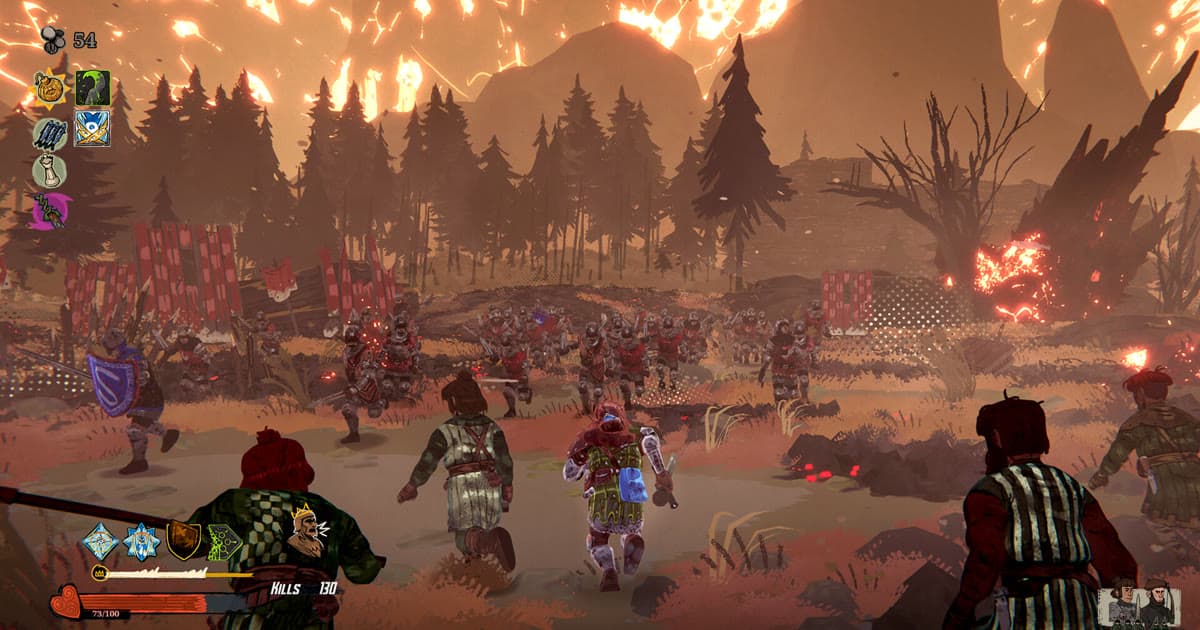
Tears of Metal has a clearer personality than most Early Access action roguelites. The pitch is easy to understand: take the scale and disposable enemy ranks of a Musou game, add route choices and temporary powers associated with a roguelite, then frame the whole campaign as a bloody Scottish rebellion.
The result works best when the screen fills with soldiers and one well-timed combo or army command tears a path through them. Multiple hands-on reviews agree that the impact, presentation and core idea are the game's strongest assets. Try Hard Guides praised the confident medieval-metal style and genre blend, while Third Coast Review found the combat loose but impactful. Windows Central was more enthusiastic, highlighting the characters, music, enemy variety and the satisfaction of returning stronger after a defeat.
The reservations are just as consistent. Several reviewers found progression too stingy, later fights too visually busy and some upgrades less transformative than a strong roguelite build should feel. The game is already entertaining; the question is whether its current friction bothers you more than its battlefield fantasy excites you.
Use the Village upgrade guide for a practical response to that progression friction. For platform-specific buying facts, see the Steam page; mixed-store groups should also check the current crossplay fix before starting a campaign.
The crowd combat delivers the fantasy
The basic pleasure is immediate: drive a Hero into a mass of enemy troops, chain attacks into finishers, react to armored captains and spend command energy to bring allied units into the fight. Enemies fly, paint-like blood cuts across the image, and the hand-drawn presentation makes even ordinary battles look like panels from a violent graphic novel.
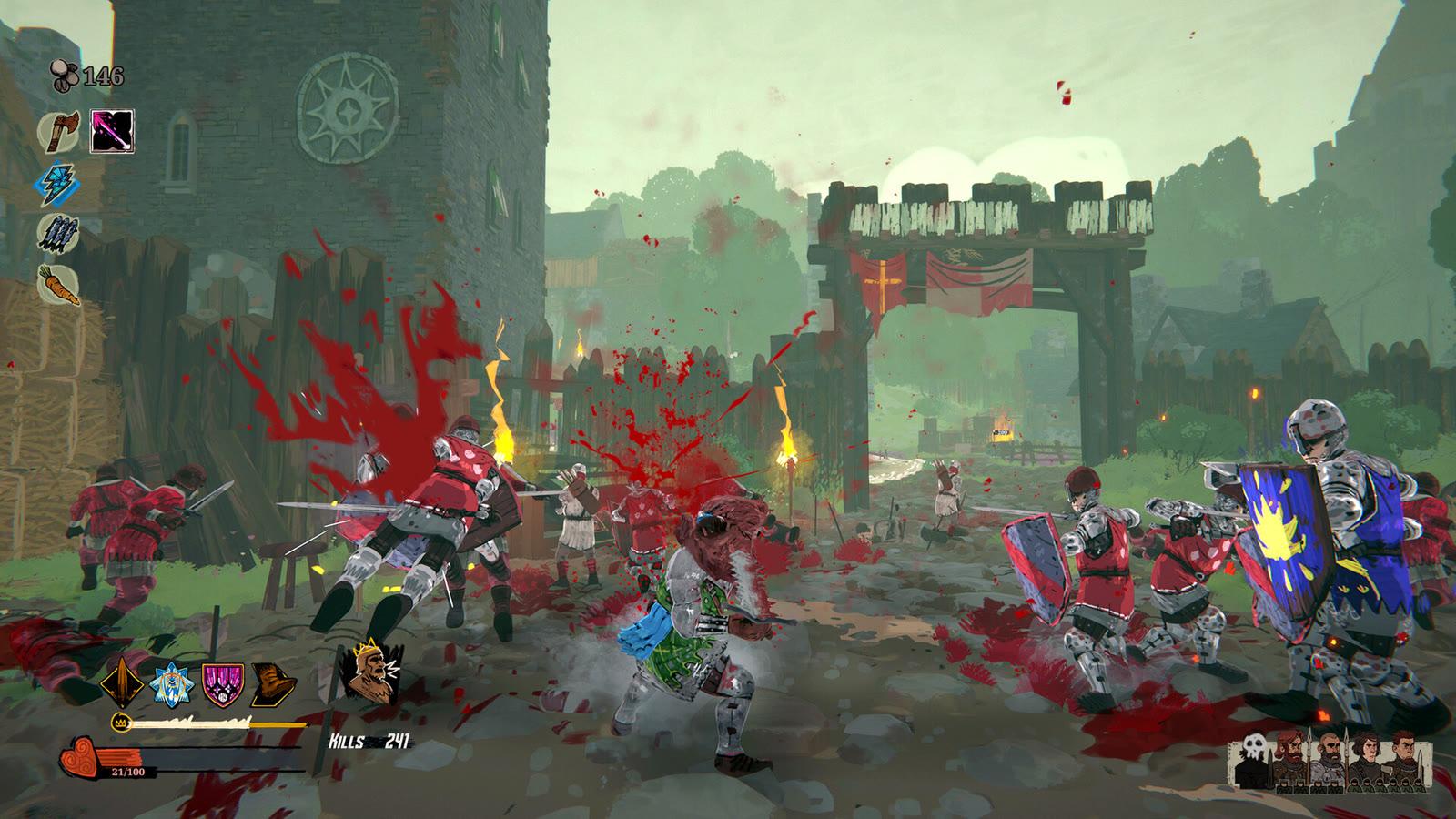
The combat is deliberately broader and less exact than a Soulslike. That helps the one-versus-an-army spectacle, but it can also expose a shallow edge. Try Hard Guides found the combo system simple and encounter length inconsistent. Its reviewer also questioned how much allied soldiers contribute when the player usually has to defeat the important enemy captains.
That criticism is useful because it identifies the split at the heart of the game. Tears of Metal looks like an army battle, yet much of the meaningful work still belongs to the Hero. Players who want the soldiers to behave like independent tactical units may find the system light. Players who want an action game with an army-shaped source of abilities are more likely to enjoy it on its current terms.
Emblems give each campaign its build
Emblems and artifacts prevent the combat from being only a fixed sequence of light and heavy attacks. Clan powers can add damage types, defensive effects, triggers and synergies, while the official Steam description advertises more than 100 artifacts to combine. Different Heroes then change the foundation under those choices.
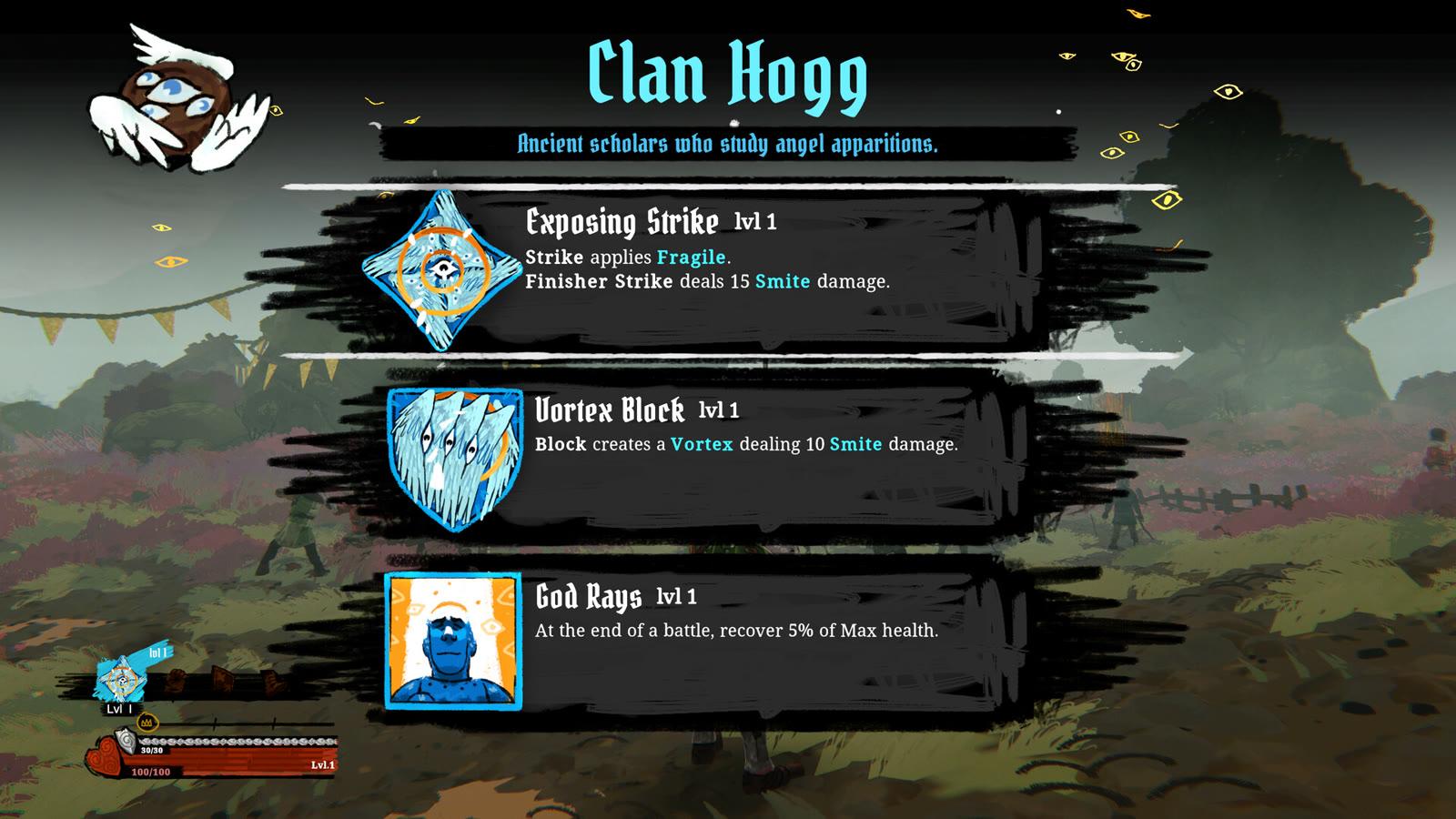
This layer produces the game's best replay value, but the quality of the upgrades is contested. VDGMS liked the combat depth created by militia support and clan powers, then argued that permanent rewards arrive too slowly. Try Hard Guides similarly found too many upgrades passive or statistically unexciting.
Those reports describe the launch-period balance, not an immutable system. Paper Cult's version 0.11 update explicitly reworked metaprogression rewards, the coin economy, fountains, treasure chests and Charm rarity. The changes show that the developer recognized the same pressure points, but they do not prove that every progression complaint has been solved for every player.
The August 21 roadmap makes that distinction clearer. Paper Cult says phase two will give players more control over build crafting, improve Emblem families and synergies, and rebalance metaprogression to reduce grindiness. None of those reworks has a date or a confirmed live-build number, so this review still judges the economy players can buy today rather than treating the plan as a fix that has already shipped.
Progression creates purpose and friction
The game has both temporary campaign strength and permanent growth. Heroes collect Emblems, Charms and other advantages during a campaign; between attempts, the settlement expands and soldiers can be recruited or promoted. That gives a failed run something to contribute beyond practice.
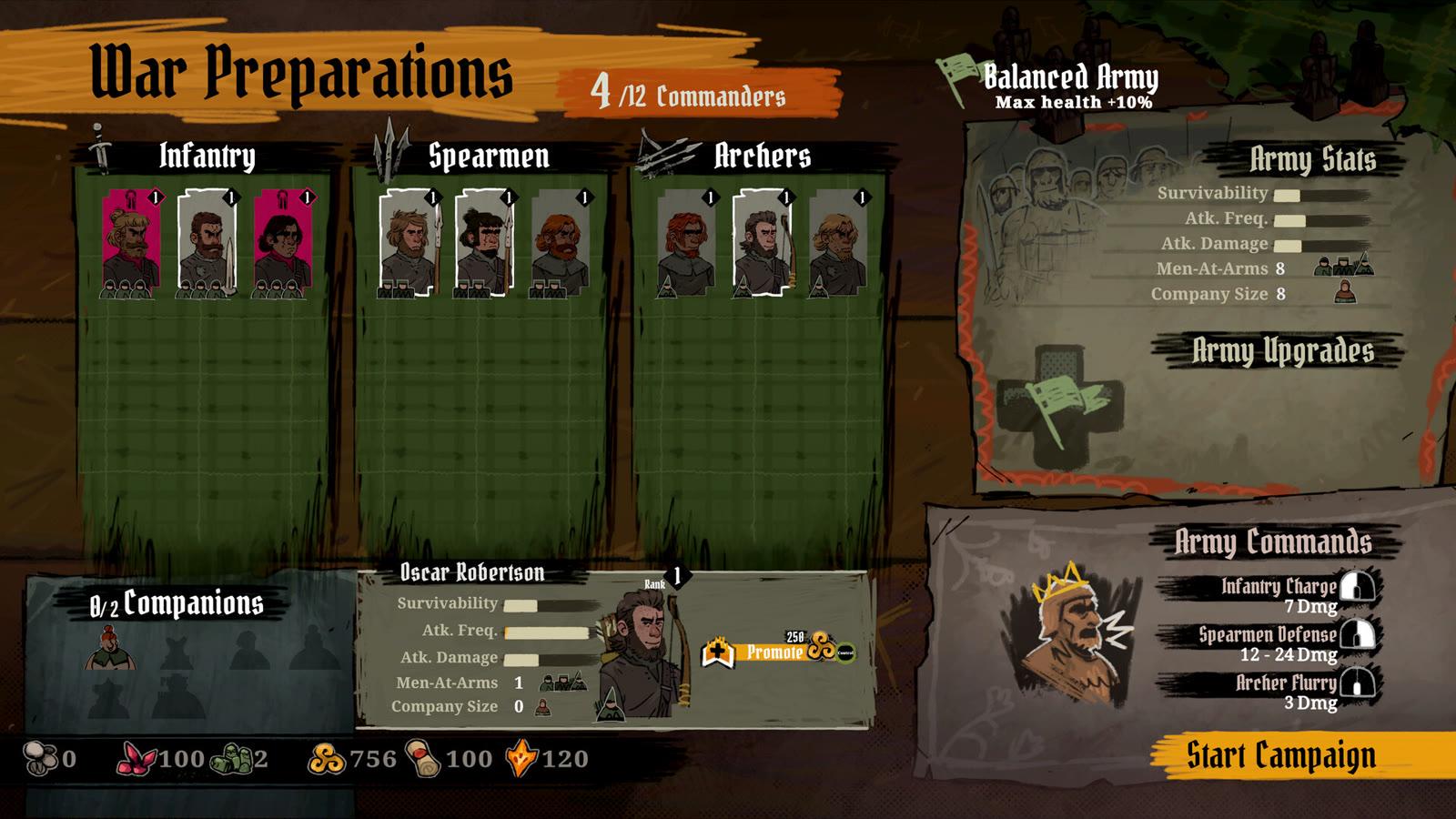
The tension is that campaign power and permanent resources can compete for attention. GameObserver finished the available three-act campaign in a 23-hour review playthrough but did not recommend the Early Access build, citing grind, high-threat visual clutter and encounters that became more annoying than exciting. VDGMS reached a similar conclusion about slow permanent growth and environments within an act feeling too alike.
There is no single correct response to that structure. If incremental unlocks are the reason you replay roguelites, the economy can feel restrictive. If the combat itself is enough to make another attempt appealing, the same system provides a longer runway.
Visual style is a strength; visual clarity is not always
Paper Cult's thick outlines, ink strokes, halftone textures and violent color bursts give Tears of Metal an unmistakable look. It is the most broadly praised part of the game across the reviews checked for this article.
The same excess can make late encounters hard to read. GameObserver reported that enemy telegraphs, user-interface panels, soldiers and elemental effects can crowd the screen at high Threat. Negative Steam reviews also repeatedly mention difficulty identifying the attack that caused a hit during busy captain and boss fights.
This is more than a cosmetic complaint because blocking, parrying and dodging depend on readable cues. Players who enjoy maximal screen-filling effects may accept the trade. Players sensitive to visual noise should treat it as a real reason to wait for further interface and effects tuning.
Is Tears of Metal good solo or only in co-op?
The official feature set supports solo play and online co-op for up to four players. The campaign systems work alone, and the positive Windows Central report specifically enjoyed the solo experience. Co-op adds the appeal of several Heroes and armies colliding with the same battlefield, but it also made network stability a more important part of the buying decision.
Patch 0.12.58540, released August 13, says networking was substantially optimized and desynchronization should be less frequent. It also replaces the coin cost for reviving another player with 50% of the reviver's current Health. Paper Cult still warns that poor or distant connections can produce short stutters, so the patch is a meaningful improvement claim rather than a guarantee for every group. See the official version 0.12.58540 announcement.
Version 0.14.58630 followed on August 14 with fixes for Elite and Boss HP, Threat Level and Campaign Map desynchronization, plus several client-side movement and boss-spawn issues. Those official fixes improve the current technical picture, but Paper Cult still does not claim that every co-op problem has been eliminated.
Paper Cult's August 21 update says the next patch will be a larger stability push before phase-two system reworks. This is a useful direction signal, not a reason to score unshipped stability work as part of the current build.
The larger unresolved issue is mid-campaign saving. Paper Cult says it is still actively working on the feature. If your sessions are frequently interrupted, waiting is sensible: several player reviews identify the inability to resume a long campaign as their main frustration.
How much content is in Early Access?
The current core campaign reaches the end of Act 3. The launch scope includes three playable Heroes, bosses, settlement upgrades, Emblems, equipment, companions and the full progression loop. Steam advertises more than 45 handcrafted environments, although route choices and repeated locations mean that number should not be read as 45 completely separate campaigns.
Early Access is already changing the package. Patch 0.12 added Aodh, the Vigil as an unlockable companion, alongside networking, optimization and revive changes. Paper Cult plans additional Heroes, Emblems, equipment, Charms, companions and Village content, but undated plans should not be counted as content you are buying today.
The newer three-phase roadmap names the Plague Doctor as an example of major phase-three content. Phase two is more about build agency, Emblem synergies and less grindy metaprogression. No phase has a release date, and the optional Beta Branch for in-progress reworks is described as something Paper Cult is considering rather than a currently available promise.
At the current $24.99 US Steam price, the value depends less on whether a beginning-to-end loop exists—it does—and more on whether you enjoy repeating that loop while the balance evolves. Steam also states that the price is planned to increase after Early Access, without publishing the future amount.
What Steam reviews say now
Steam's official review API reported 2,400 all-language reviews across all purchase types on August 27: 2,062 positive and 338 negative, or about 85.9% positive. Steam summarizes that response as Very Positive.
The store page can show a different count or percentage when it defaults to a language, recency or purchase-type filter. This page records the filter scope with the number so a later snapshot can be compared on the same basis.
That aggregate supports the conclusion that most owners enjoy the game, but it does not erase the recurring complaints. The most useful reading is the combination:
- positive reviews repeatedly praise the combat feel, art, music and fresh Musou-roguelite blend;
- negative reviews repeatedly point to grind, simple combos, long encounters, weak-feeling upgrades, visual clutter and the missing mid-run save;
- official patches already target progression, performance, networking and co-op friction, so old launch reviews may not describe every current detail.
Should you buy Tears of Metal now?
Buy or try it now if:
- the idea of Dynasty Warriors-scale crowds with roguelite build choices is exactly what you want;
- strong visual identity and impact matter more to you than technical polish;
- you are comfortable with Early Access balance changes;
- solo play or online co-op with up to four players fits your group;
- a complete three-act core loop is enough even before all planned content arrives.
Wait for updates if:
- you need a mid-campaign save;
- visual clutter makes reaction-based combat frustrating;
- slow permanent progression or repeated encounters quickly feel like grind;
- you expect every temporary upgrade to transform a run dramatically;
- you want final content, stable balance and a fixed 1.0 package before paying.
The fairest current verdict is promising, distinctive and already fun for the right player, but still visibly Early Access. It earns its Very Positive reception without making its rough edges imaginary.
Frequently asked questions
Is Tears of Metal worth it?
Is Tears of Metal good?
Can Tears of Metal be played solo?
How much content does Tears of Metal have?
Does Tears of Metal have mid-run saves?
What is the current Tears of Metal review score on Steam?
Will the roadmap fix Tears of Metal's grind?
Sources and review methodology
Store facts, pricing, features, screenshots and review totals were checked on
August 27, 2026. The review snapshot uses Steam's official API with
language=all and purchase_type=all. Review observations are attributed to
the writers who
played the Early Access build; this page does not convert their experiences
into an invented first-person playthrough.
- Official Tears of Metal Steam store
- Official patch 0.12.58540
- Official patch 0.14.58630
- Paper Cult's August 21 roadmap
- Steam official all-language review API
- Try Hard Guides Early Access review
- GameObserver Early Access review
- Third Coast Review impressions
- VDGMS Early Access review
- Windows Central hands-on feature
- Steam negative-review page